


Sanquelim Reclaimed Mines – Regeneration, Purpose, Legacy
In the 1980s and 90s, long before mine closure regulations were mandated, Sesa Goa (now VISL) pioneered one of India’s most ambitious mine reclamation projects at Sanquelim. The Sanquelim Group of Mines,located in the North Goa District of Goa, cover an area of >200 ha. Once major mining operations were discontinued in the late 90s due to the uneconomical nature of mining , an ambitious and unique mine reclamation project was undetrtaken by the Company.
Systematic backfilling of pits and bench formation enabled large-scale afforestation, with over 7.5 lakh trees, including endemic species as well as others, were planted across 100 hectares of erstwhile mining land. Guided by the Goa State Forest Department, fast-growing species stabilized dumps, while later phases introduced native horticulture and forest plants with expertise from Goa University, the State Agriculture Department, and the Rubber Board -proving even commercial crops like rubber could thrive on reclaimed land.
Innovation extended beyond afforestation. Mine pits were converted into rainwater-harvesting reservoirs, and with support from the National Institute of Oceanography, pisciculture was introduced in 1990, successfully cultivating Rohu, Katla, and Common Carp. Biodiversity flourished, with rising bird and butterfly activity. A plantation management plan approved by the Forest Department further enriched the ecosystem, replacing mature Acacia with native species and creating themed gardens like Nakshatra Vatika, Charak Vatika, and a butterfly garden.
The reclaimed site also became a hub for people-focused initiatives. The Sesa Technical School and the Sesa Football Academywere established at the erstwhile mining site.
Ecologically, the forest now sequesters nearly 16,000 tonnes of CO₂ annually, equivalent to removing 80,000 cars from the road. Recognized nationally as a model mine closure project, Sanquelim stands as proof that reclamation can restore landscapes, empower communities, and redefine sustainability.

Waste Heat Recovery Power Plant – Powering Sustainability
The initiative has resulted in mitigating over 1.4 million t CO2e over the last five years.
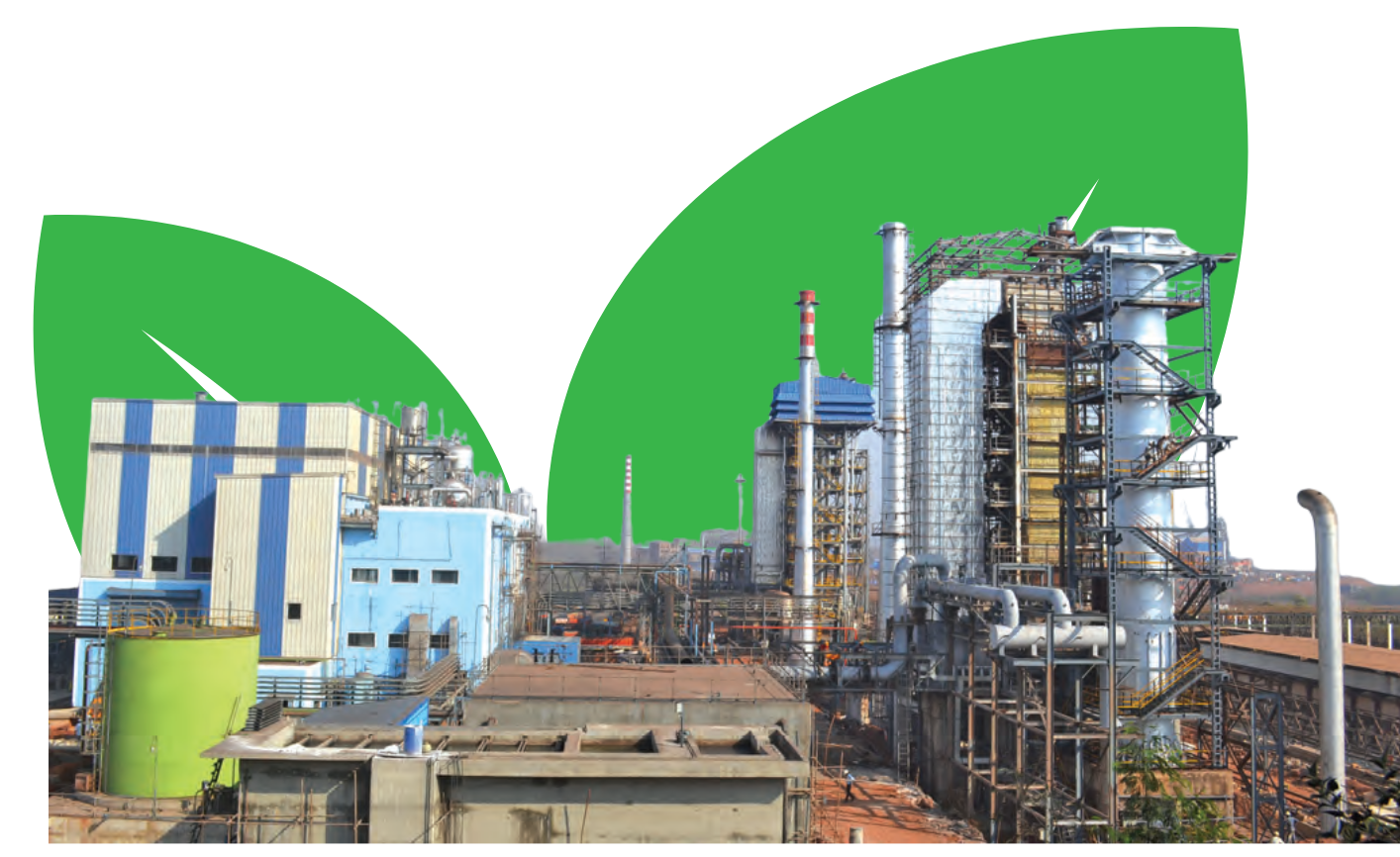
VISL’s Value Added Business (VAB) plant at Amona hosts the 65 MW Waste Heat Recovery Power Plant (WHRPP), which is a game changer in terms of fostering sustainability across VISL operations. PP1 Set up in 2006 as a 30 MW power plant, the facility was upgraded to 65MW by 2022.
The WHRPP contributes to cleaner and sustainable operations by capturing heat from blast furnaces and coke oven flue gas, converting it into electricity, it reduces dependence on the grid and strengthens the company’s circular economy efforts. It is also Goa’s only power plant and contributes to the State’s electricity requirements as well. On an average the WHRPP produces —- million units per year and helps sustainably power the operations of VISL.
Onboarding of Electric Vehicles (EVs) – The Pivot to the Future

With a focus on promoting greater sustainability in core operations, VISL has been onboarding the EVWLs with the aim of cutting down on fossil fuel consumption, and for management of sound levels as well as driver fatigue levels. This partial shift from diesel power to EVWL is another strong step forward. Beyond cutting diesel use and operating costs, the EVWLs help conserve energy even during idling or low‑power tasks. Each EVWL helps reduce diesel consumption by ~50000 litres annually.
Project Aranyam – Towards a Greener Future
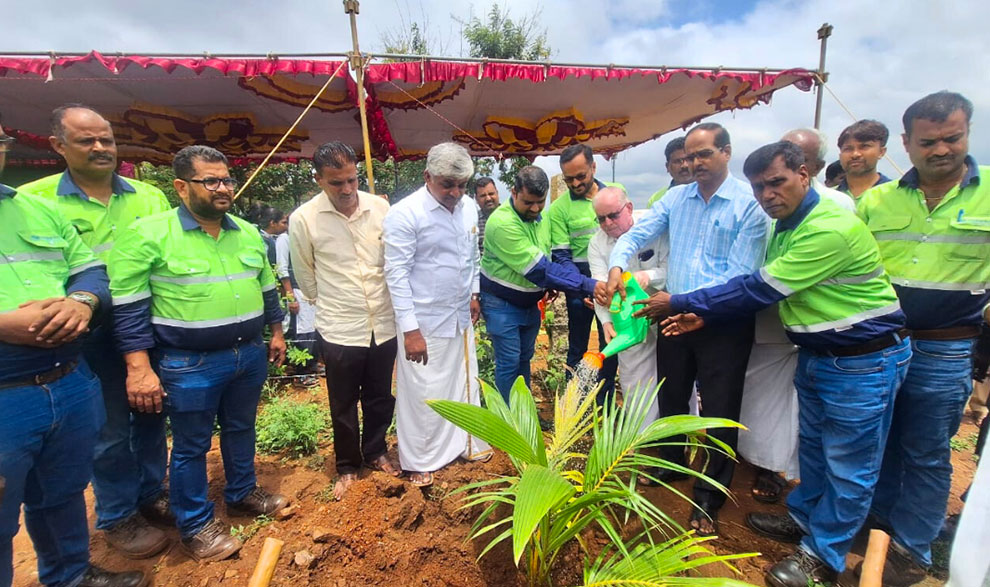
Project Aranyam reflects VISL’s strong commitment to environmental stewardship and community partnership. Through a large-scale afforestation drive launched in FY26, the company planted ~1,85,000 saplings across locations, including at plant sites and within the communities. The initiative not only to helping enhance the green cover but also augments long-term carbon sequestration efforts, while also contributing to the biodiversity in the operational areas.
At Sirigere Mutt, Karnataka, ~ 10,000 fruit-bearing saplings were planted across 20 acres of land. Implemented as part of the #IronWill4GreenerPlanet campaign and aligned with World Environment Day, the initiative supports biodiversity enhancement, improves soil health, and creates sustainable green zones that benefit both nature and local communities. ~30000 saplings were planted in an around communities proximal to Bokaro, Jharkhand.
By focusing on fruit-bearing species, Project Aranyam ensures long-term ecological and community value , providing food security, enhancing livelihoods, and strengthening local ecosystems. It also embodies a shared vision of resilience and regeneration, where industry and community unite to nurture the environment.
VISL is committed to fostering environmental stewardship and the sustained plantation efforts also contribute to restoring landscapes, empowering communities, and embedding sustainability into everyday operations – testimony to transforming environmental responsibility into meaningful action.
Project Uday – Leveraging Sunshine for Sustainability
Driven by a commitment to sustainability, the company has embarked on implementing solar energy solutions across locations. Roof top solar power plants have been commissioned at locations in Jharkhand and Goa,integrating energy‑efficient technologies to accelerate the shift towards sustainable production. The solar power initiative in Jharkhand helps mitigate ~1,500 tonnes of CO₂ emissions annually; complementing this, the solar unit Goa generates over 1.5 MWp of RE each year, contributing to VISL efforts towards decarbonisation endeavours.
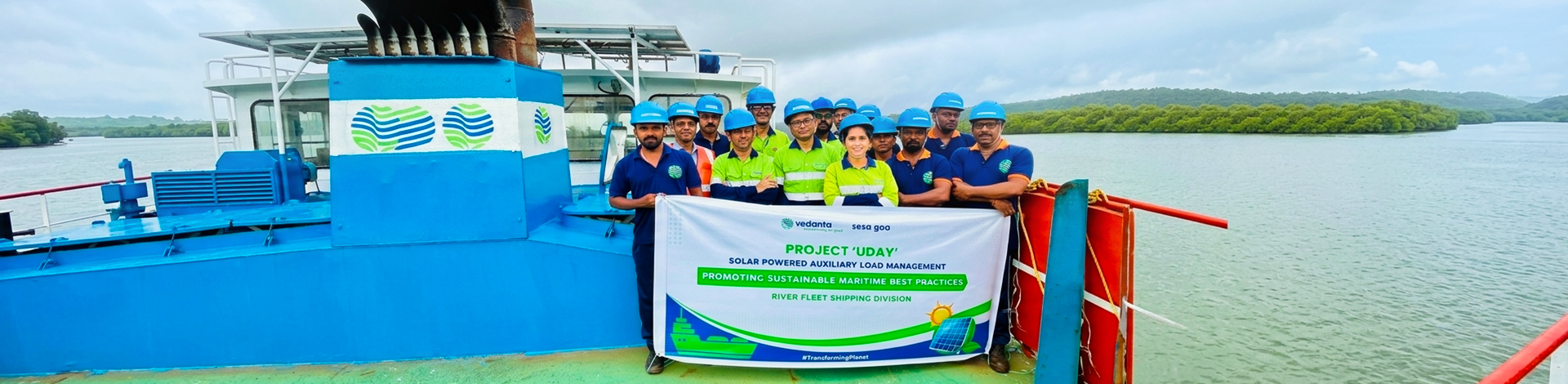
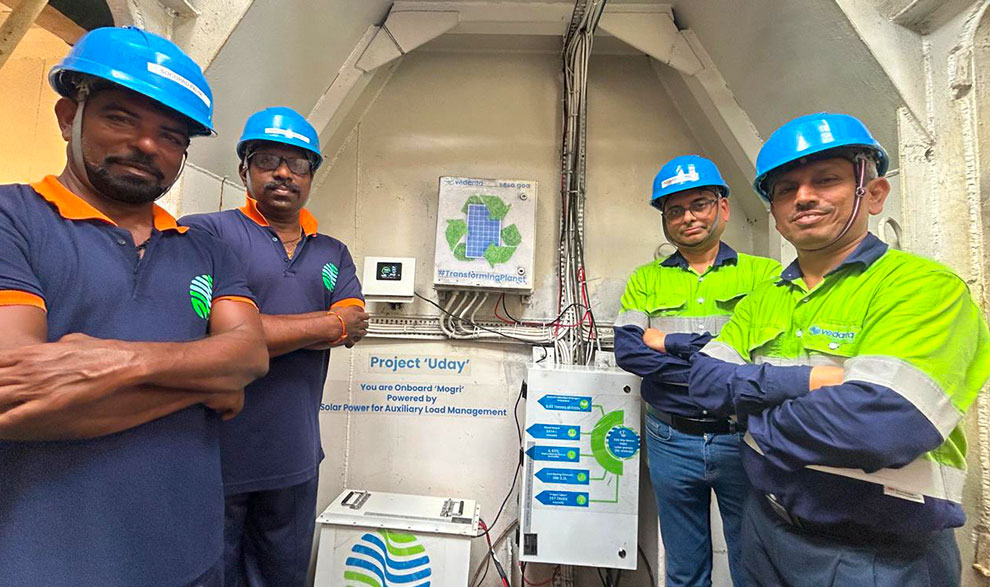
Furthermore, VISL’s River Fleet Shipping (RFS) Division has integrated solar power in marine logistics under Project Uday. The first such integration was successfully commissioned on barge MV Mogri, powering auxiliary loads such as accommodation, navigation lighting, and other auxiliary energy needs.
The system uses high‑efficiency 550 Wp Mono PERC (PE‑550HM) solar panels, enhancing energy efficiency and reducing reliance on conventional fuel. Each barge equipped with this setup is expected to cut ~6.53 tCO2e annually, equivalent to planting ~300 trees. When scaled across the fleet, the initiative has the potential to cumulatively reduce 149.85 tCO2e, directly supporting Scope 1 emission reduction targets. The initiative is also aligned with the Maritime Organization’s Decarbonization Strategy, the Energy Conservation Act, 2001, and MARPOL Annex VI standards.
Project Uday reflects a forward‑looking approach which leverages solar energy for setting benchmarks in running increasingly sustainable operations.