


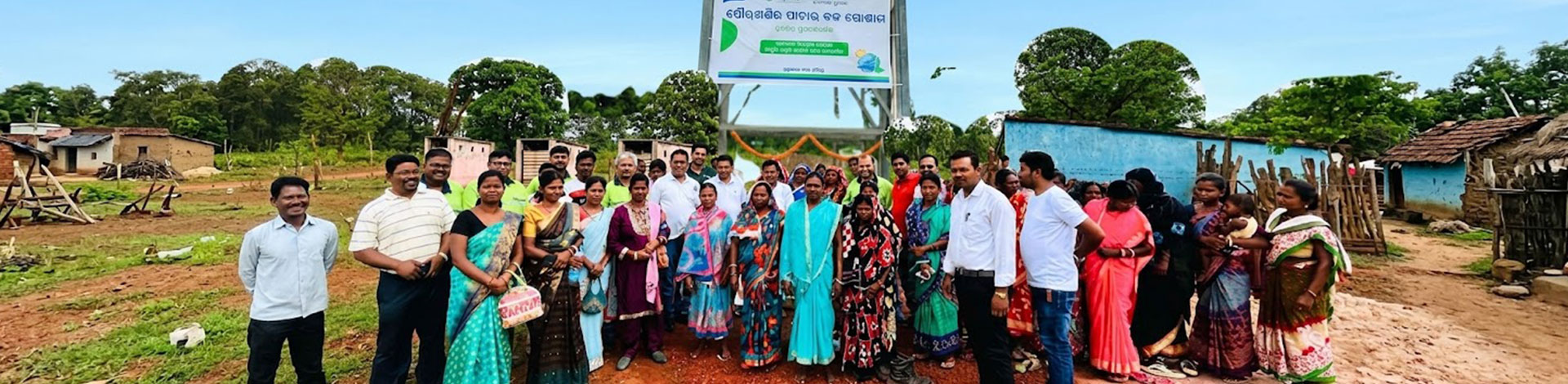
VISL places strong emphasis on improving access to essential services and strengthening community infrastructure as a foundation for enhancing quality of life in its operational areas. Its integrated approach addresses critical needs related to water security, sanitation, connectivity, education, and community assets, particularly in underserved and remote regions.
Through targeted water security interventions, VISL supports reliable access to safe drinking water by restoring and upgrading handpumps, installing solar-operated drinking water systems, extending tap connections, and promoting hygiene awareness. These efforts reduce vulnerability to water scarcity and improve public health outcomes. Complementing this, VISL undertakes infrastructure development initiatives focused on repairing rural roads, excavating and desilting ponds, and renovating shared community assets—interventions that enhance connectivity, water availability, and everyday living conditions.
VISL also prioritises social infrastructure that supports long-term human development. Solar-powered borewells and standposts improve potable water access in water-stressed villages, while investments in sanitation and WASH facilities strengthen hygiene practices. Infrastructure for childcare and education, including modern community centres, improved school facilities, and transport support, boosts early childhood care, school attendance, and learning environments. Collectively, these initiatives foster resilient communities, reduce service gaps, and contribute meaningfully to sustainable rural development.